Introduction
The evening sky has always held a particular fascination for humanity, and in South Asian cultures, the question of “aaj chand kitne baje nikalega” is one that resonates deeply with millions. Whether you are observing a religious fast, planning a festive celebration, or simply wish to gaze upon the beauty of the lunar crescent, knowing the exact time of moonrise is essential. This query, “aaj chand kitne baje nikalega,” is much more than a simple search for time; it is a connection to tradition, spirituality, and community. From the urban sprawls of Delhi and Mumbai to the smaller cities and towns, people look skyward to catch a glimpse of the moon, marking the passage of time and the observance of sacred rituals. The importance of this query becomes particularly pronounced during major festivals like Karwa Chauth, Sakat Chauth, or the sighting of the Eid moon. In this comprehensive guide, we will delve deep into understanding how to find this information, why it varies, and the cultural significance behind the simple yet profound question, “aaj chand kitne baje nikalega.”
The Science Behind Moonrise Times
To truly appreciate why the answer to “aaj chand kitne baje nikalega” is never a fixed one, we must first understand the mechanics of our solar system. Unlike the sun, which rises and sets at relatively predictable times throughout the year, the moon’s schedule is a moving target. The moon orbits the Earth, and its position relative to our planet changes daily, which in turn affects when it appears over the horizon. The time of moonrise shifts approximately 50 minutes later each day due to this orbital motion. When someone asks “aaj chand kitne baje nikalega,” they are essentially asking for a calculation based on complex astronomical data, including the observer’s specific latitude and longitude, the current phase of the moon, and atmospheric conditions.
Furthermore, the visibility of the moon isn’t just about its physical rise; it is about the “sighting.” For religious purposes, the question “aaj chand kitne baje nikalega” is often a request for the Chandrodaya or moonrise time. However, for festivals like Karwa Chauth or for Ramadan, it is about the visibility of the slender crescent. This requires the moon to be above the horizon after sunset. The “new moon” phenomenon, where the moon aligns with the sun, makes it invisible. As it moves away, a thin crescent becomes visible, marking the start of a new month or a significant festival day. The Pakistan Meteorological Department (PMD) often issues lunar calendars to help predict these times, providing estimated dates and moon birth timings to aid in planning for religious and official events. So, when you ask “aaj chand kitne baje nikalega,” you are delving into a fascinating intersection of orbital mechanics and cultural practice.
Moon Sighting for Religious Observances
The question “aaj chand kitne baje nikalega” is deeply woven into the fabric of religious life in South Asia. In Islam, the lunar calendar dictates the timing of major events. The sighting of the new crescent moon marks the beginning of months, including the holy month of Ramadan and the celebration of Eid-ul-Fitr. Chaand Raat, or the “Night of the Moon,” is a time of celebration where families and friends gather to spot the new moon, signaling the arrival of Eid. The Central Ruet-e-Hilal Committee in Pakistan, for instance, is authorized to announce the new moon sighting, relying on testimonies and traditional methods. When people ask “aaj chand kitne baje nikalega” during Ramadan, they are eagerly awaiting the confirmation that determines when they will begin their fast or celebrate the festival.
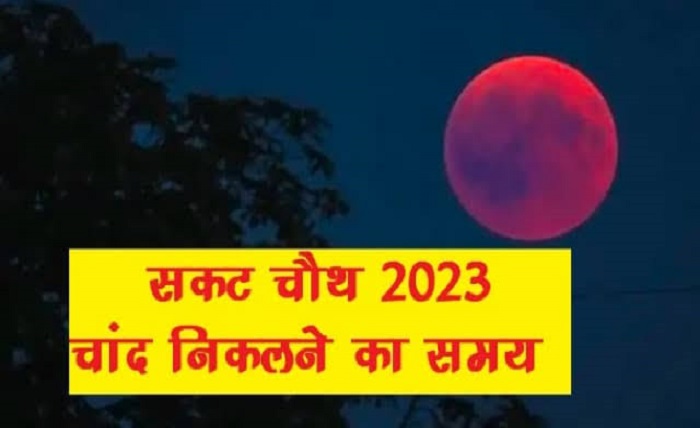
Similarly, in Hinduism, moonrise holds immense significance for specific fasts. The query “aaj chand kitne baje nikalega” is particularly common during Karwa Chauth, a festival where married women fast for the long life of their husbands, breaking their fast only upon sighting the moon. The timing of moonrise dictates when the fast can be concluded. For example, in 2024, the Karwa Chauth moonrise was expected around 8:15 PM in Delhi. Similarly, during Sakat Chauth, a fast observed for the well-being of children, the question “aaj chand kitne baje nikalega” is paramount, as the fast is broken only after offering arghya (water) to the rising moon. Here, the “aaj chand kitne baje nikalega” is not just curiosity but a matter of religious duty and the culmination of a day’s devotion.
City-Wise Moonrise Timings
One of the most critical aspects of answering “aaj chand kitne baje nikalega” is recognizing that the time varies significantly by location. While the moon is a global entity, its appearance over the horizon is a local event. Therefore, a search for “aaj chand kitne baje nikalega” in a specific city will yield a different result than a search in another. Let’s look at some examples based on available data for various festivals.
During the recent Sakat Chauth festival, specific timings were widely searched. For many cities in Uttar Pradesh, the timing was tracked closely, with Lucknow expecting the moon around 8:41 PM, Kanpur around 8:44 PM, and Varanasi as early as 8:28 PM. For the national capital, New Delhi, the moon was expected around 8:54 PM. In Mumbai, the timing was later, estimated at 9:22 PM. This demonstrates that even within a single state or country, the time you receive when you ask “aaj chand kitne baje nikalega” is highly location-dependent. For other cities, like in Chhattisgarh during Karwa Chauth, Raipur saw moonrise at 8:05 PM, while Jagdalpur saw it at 8:08 PM.
Modern Tools and Traditional Methods
The methods for determining “aaj chand kitne baje nikalega” have evolved beautifully, blending ancient tradition with modern technology. The traditional method involves direct observation of the sky, often after sunset. For religious announcements, committees like the Ruet-e-Hilal Committee rely on actual testimonies from credible witnesses who claim to have seen the crescent moon. This method is steeped in history and is crucial for establishing the start of lunar months in many Islamic countries. However, it can be subject to error due to weather conditions like cloud cover, fog, or pollution, which can delay the sighting even if the moon has technically risen.
On the other hand, modern science provides precise predictions. Using complex astronomical algorithms, one can calculate the exact moment of moonrise for any location on earth. Apps, websites, and even packages like the “moon_sighting” Dart package can compute moon phases, topocentric position, and visibility estimates based on criteria like the Odeh or Yallop tests. These methods can answer the question “aaj chand kitne baje nikalega” with exactitude for any city in the world. For instance, during Eid 2026, timings and visibility were predicted for major Indian cities like Delhi and Mumbai. While these tools are highly accurate, religious authorities often use them as a guide alongside the traditional method of naked-eye sighting to ensure harmony with both science and faith.
Common FAQs About Moon Sighting
In the digital age, the search for “aaj chand kitne baje nikalega” often leads to a series of follow-up questions. People want to know not just the time but also the reliability of the information and the nuances of sighting. Here are some of the most common questions answered:
1. What is the difference between moonrise and moon sighting?
Moonrise is the astronomical time when the moon’s upper limb appears over the horizon. Moon sighting, particularly for religious purposes, is when the moon becomes visible to the naked eye. The answer to “aaj chand kitne baje nikalega” might refer to the actual rise, but for fast-breaking, it’s about the sighting, which may be 20-30 minutes later.
2. Why do moonrise times differ so much between cities?
The Earth is a sphere, so the moon’s position over the horizon changes based on your latitude and longitude. When you ask “aaj chand kitne baje nikalega” in Delhi, you are looking at a different local horizon than someone in Kolkata or Mumbai, leading to significant time differences.
3. Can we rely solely on astronomical predictions for religious purposes?
Astronomical predictions are highly accurate for moonrise and even visibility. However, many religious bodies adhere to the traditional principle of physical sighting (Ru’yah) to declare the start of a new month. Scientific data is often used as a guide but not the sole authority, as seen in Oman’s approach to Ramadan 2026.
4. Does weather affect moon sighting?
Yes. Even if the answer to “aaj chand kitne baje nikalega” is astronomically accurate, the moon may not be seen. Cloud cover, fog (like the winter fog common in North India), and high levels of air pollution can obscure the crescent, making it invisible to the naked eye. This often leads to a difference of a day in the start of a month.
5. How can I get the most accurate time for my city?
The best way to get an accurate answer to “aaj chand kitne baje nikalega” is to use a local moonrise/moonset calculator that uses your exact GPS coordinates. Check local news, religious committee announcements, or trusted weather apps that provide astronomical data.
Conclusion
The persistent query, “aaj chand kitne baje nikalega,” serves as a beautiful testament to the connection between humanity, the cosmos, and our time-honored traditions. It is a question that bridges the gap between the precise calculations of modern astronomy and the deeply emotional rituals of faith. Whether it is a woman waiting to break her Karwa Chauth fast, a Muslim family looking for the Eid moon, or simply a stargazer wishing to see the night’s beauty, the quest to know the moon’s schedule is a universal one. As we have explored, the answer is never simple, as it depends on science, location, and even the weather.
By understanding the factors that determine the answer to “aaj chand kitne baje nikalega,” we can engage with this daily curiosity with a deeper appreciation. We can consult local resources, respect the different methods of calculation, and understand the variations from city to city. Ultimately, the search for the moon is a search for continuity and connection to our ancestors, who looked at the same sky with the same anticipation and, with luck, the same beautiful sight.
FAQs
1. What exactly does “aaj chand kitne baje nikalega” mean?
This is a Hindi/Urdu phrase that translates to “what time will the moon rise today?” It is commonly asked by individuals needing to know the precise moonrise time for performing religious rituals, breaking fasts, or engaging in cultural celebrations like Karwa Chauth, Sakat Chauth, and Eid festivities.
2. Is the moonrise time the same all across India?
No. The time when you ask “aaj chand kitne baje nikalega” and look for an answer will depend heavily on your location. Due to the Earth’s curvature and rotation, the moon appears over the eastern horizon at different times for different longitudes. For instance, the moonrise in Kolkata is often earlier than in Delhi, and it is later in Mumbai compared to the northern cities.
3. Is it better to check online or wait for an official announcement?
This depends on your purpose. For strictly private or personal reasons, online calculators and apps provide a highly accurate time. However, for religious observances like the start of Ramadan or Eid, it is mandatory to wait for the official announcement from the religious authorities, such as the Ruet-e-Hilal Committee or local mosque leaders, as they make the final declaration based on physical sighting.
4. Why do the predicted times often differ from what I see?
The answer to “aaj chand kitne baje nikalega” from a calendar or app is an astronomical prediction. The actual visibility can be delayed or even blocked entirely due to environmental factors. Atmospheric conditions like fog, dust storms, haze, or thick cloud cover can obscure the moon even after it has risen, making it impossible to see with the naked eye.
5. Are there specific days when “aaj chand kitne baje nikalega” is more important than others?
Yes. The search is usually most popular and significant on specific religious days. The query is extremely important on Karwa Chauth (for married women to break their fast), Sakat Chauth (for mothers), and on the 29th day of the lunar month in the Islamic calendar (to determine the start of Ramadan or Eid). On these days, the answer marks the conclusion of a day’s worship or the start of a new celebration.