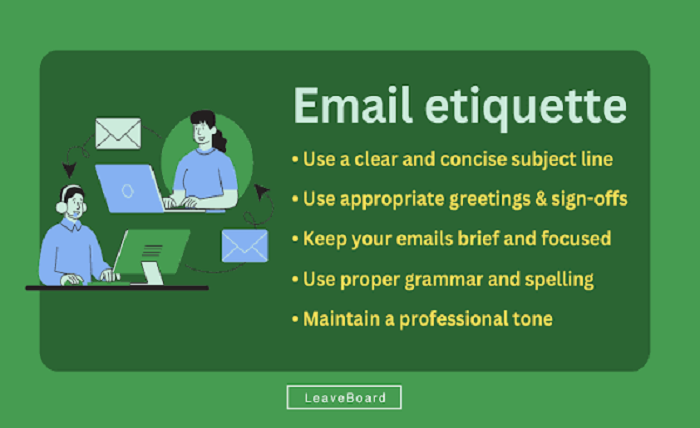
In our hyper-connected world, the average professional spends over 25% of their workweek managing their inbox, yet many still struggle with the basics of communication. The concept of email etiquette is often dismissed as common sense, but it is actually a nuanced skill that can determine the trajectory of careers and the success of business ventures. Whether you are a fresh graduate sending out your first cover letter or a seasoned executive managing a global team, email etiquette dictates the clarity, tone, and efficiency of your written correspondence. It is the silent ambassador of your personal brand, and overlooking its importance can lead to miscommunication, lost opportunities, and damaged professional relationships. As we navigate the complexities of remote and hybrid work environments, the rules of email etiquette have evolved to accommodate faster response times, mobile reading habits, and the need for emotional intelligence in text-based communication. This guide aims to provide a comprehensive framework for refining your email etiquette, ensuring that every message you send reinforces your professionalism and achieves its intended purpose.
Setting the Foundation for Email Etiquette
Before diving into the specific components of a message, it is crucial to understand the philosophical underpinnings of email etiquette. This practice is fundamentally about respect for the recipient’s time and attention. Good email etiquette acknowledges that the person on the other end likely has a full inbox of their own, and it seeks to make your message as frictionless as possible to process. One of the most critical aspects of foundational email etiquette is the “Subject Line.” This brief field is the gatekeeper of your message; if it is vague or misleading, your email may be ignored or sent straight to the trash. Effective email etiquette dictates that the subject line should be specific, actionable, and concise. For example, instead of “Update,” use “Q3 Projections for Client Review.” This is a core tenet of email etiquette because it allows the recipient to prioritize their inbox effectively.
Furthermore, foundational email etiquette requires an understanding of when to send an email versus when to pick up the phone or use a messaging app. While email etiquette provides a written record, it is not always the most efficient tool for urgent or sensitive matters. A key rule of email etiquette is to assess the urgency and complexity of the issue; if it requires more than three back-and-forth exchanges, it is likely better suited for a call or a meeting. However, for formal proposals, documentation, or asynchronous communication across time zones, email etiquette remains the gold standard. You must also consider the legal and confidentiality aspects of your correspondence, as proper email etiquette includes using encryption or disclaimers when handling sensitive data.
The Anatomy of a Professional Email
The structure of your message is the scaffolding upon which good email etiquette is built. Every email should follow a logical flow that guides the reader from the opening salutation to the final call to action. The Greeting is the first opportunity to demonstrate your email etiquette. While “Hey” might be acceptable in a startup environment, formal settings generally prefer “Dear [Name]” or “Hello [Name].” However, modern email etiquette suggests that the salutation should mirror the existing relationship or company culture. Following the greeting, the opening line serves to build rapport, but in the interest of good email etiquette, this should be brief. A simple “Hope you had a great weekend” is often sufficient before getting to the meat of the message.
The Body of the email is where email etiquette truly shines. This section must be clear, concise, and logically organized. To adhere to best practices for email etiquette, break long paragraphs into bullet points or numbered lists. This makes the information skimmable, which is a hallmark of excellent email etiquette in the age of mobile reading. The Closing is equally important. Professional email etiquette requires a sign-off that matches the tone of the email, such as “Best regards,” “Sincerely,” or “Thank you.” Your Signature block is also a component of proper email etiquette; it should include your full name, title, company, and relevant contact information, but avoid overloading it with quotes or images that might distract from the message itself.
The Nuances of Tone and Language
The most challenging aspect of email etiquette is managing tone. Without the benefit of vocal inflection or body language, written words can often be misinterpreted. Practicing good email etiquette involves consciously choosing neutral, positive, and professional language. Negative phrases can be rewired through effective email etiquette; for instance, instead of writing “You failed to send the report,” a professional using strong email etiquette might write, “I haven’t received the report yet, could you please check on the status?” This pivot is central to polite email etiquette because it assumes good intent while still addressing the issue.
Moreover, email etiquette strongly advises against the use of sarcasm, humor, or colloquialisms that might not translate well across cultural or generational lines. The best email etiquette relies on direct, unambiguous language. It is also vital to pay attention to capitalization and grammar. While a casual text message might allow for lowercase letters, proper email etiquette requires standard sentence case and punctuation. Failing to proofread is a violation of professional email etiquette, as it suggests a lack of care and attention to detail. Additionally, the use of emojis in professional correspondence is a gray area of email etiquette; while sometimes acceptable in informal settings, they are best avoided unless the recipient has used them first.
Managing Attachments and Formatting
A frequently overlooked component of email etiquette involves the management of attachments and formatting. There is a specific rule of email etiquette regarding attachments: always mention them in the body of the email. It is poor email etiquette to send an attachment with no context, as the recipient may be wary of opening it or may not immediately understand why they need it. When practicing proper email etiquette, you should also state the file type and size, especially if it is a large document. This forewarning is a courtesy that falls under excellent email etiquette, as it allows the recipient to prepare for the download or to clear space.
Formatting plays a crucial role in email etiquette as well. The use of “Reply All” and “CC” is a minefield for many professionals. Strict email etiquette suggests that you should only CC individuals who need to be informed, not those who need to act. If you find yourself in a long email thread, good email etiquette dictates that you should summarize the conversation before adding new ideas or questions. Furthermore, the “BCC” field must be used with caution; proper email etiquette often prohibits its use in internal communications, as it can be perceived as sneaky. In external communications, using BCC to protect privacy is acceptable, but overall, transparency is the guiding principle of ethical email etiquette.
Timeliness and Response Strategies
In the fast-paced business world, speed is often equated with efficiency, but email etiquette asks us to balance speed with thoughtfulness. There is an unwritten rule of email etiquette concerning the 24-hour response window. While specific industries might require faster turnarounds, the general standard of email etiquette is that internal emails should be responded to within 24 hours, and external emails within 48 hours. However, even a brief acknowledgment that you are working on a request is a vital form of email etiquette. This “out of office” or “received with thanks” response prevents the sender from wondering if their message was lost.
Another critical element of email etiquette is the management of “Reply All.” It is one of the most irritating breaches of email etiquette to spam an entire distribution list with a message meant for only one person. Strict email etiquette requires you to check the recipient field before hitting send. Similarly, the “Forward” function requires specific email etiquette; if you are forwarding an email chain, it is good email etiquette to clean up the header information and summarize the previous context so the new recipient can understand the situation quickly. This saves the reader from scrolling through irrelevant history, which is the ultimate goal of professional email etiquette.
Best Practices for Remote and Hybrid Work
The shift to remote work has altered the landscape of email etiquette significantly. With the decrease in face-to-face interactions, email etiquette has become the primary indicator of a person’s work ethic and reliability. In remote settings, email etiquette is often tied to the expectation of availability. It is a key aspect of email etiquette to set boundaries regarding out-of-hours emails. If you work flexible hours but do not expect a reply until normal business hours, modern email etiquette suggests you schedule the email to be sent the next morning. This avoids the pressure on the recipient to respond immediately, which is a compassionate aspect of email etiquette.
In hybrid environments, email etiquette also dictates how we loop in remote colleagues. If a meeting is happening in the office, it is essential email etiquette to ensure remote participants are included and have access to the same information. This often means sending a detailed recap via email. Furthermore, the use of video links and calendar invites requires specific email etiquette; the invite should always contain the agenda and access links clearly, as clarity is the cornerstone of good email etiquette. When dealing with time zones, exceptional email etiquette involves using the recipient’s time zone when scheduling and avoiding linguistic idioms that may confuse non-native speakers.
Avoiding Common Email Pitfalls
Even the most experienced professionals can fall victim to poor email etiquette if they are not careful. One of the most common violations of email etiquette is the “Novel Email.” Sending a wall of text is a direct violation of good email etiquette. If a message is longer than a few paragraphs, it is considered best email etiquette to attach a document or schedule a meeting to discuss it. Similarly, sending an email when you are angry or frustrated is a dangerous breach of email etiquette. Drafting a heated email and then sleeping on it is the gold standard of emotional email etiquette. This delay allows you to review the message with a fresh perspective and edit out any aggressive language.
Another pitfall involves the assumption of reading comprehension. Professional email etiquette suggests that you should not assume the recipient knows the background of the issue. Unless you are in a close working relationship, it is safer email etiquette to provide a brief context link or a one-sentence summary. Additionally, ignoring the spell check is a cardinal sin of email etiquette. A simple typo can make an email look sloppy. Finally, poor email etiquette is often demonstrated by vague subject lines that lack context, such as “Hi” or “Question.” This is not just an issue of personal preference; it is a functional failure of email etiquette that hinders searchability and organizational efficiency.
Conclusion
In conclusion, mastering email etiquette is not about adhering to a rigid set of rules, but rather about cultivating a mindset of clarity, empathy, and professionalism. The principles outlined here—from crafting strong subject lines to managing tone and timeliness—are the building blocks of effective digital communication. As we continue to rely on written correspondence to bridge physical distances, the quality of our email etiquette will increasingly define our professional identities. It is a tool that, when wielded correctly, opens doors to new opportunities, strengthens business relationships, and ensures that your voice is heard clearly and respectfully. By committing to these standards, you do more than just send an email; you leave a lasting positive impression that differentiates you from the noise of the digital world. Remember, every email is a reflection of who you are, and impeccable email etiquette is the hallmark of a true professional.
FAQs
Q1: Is it acceptable to use emojis in professional emails?
-
A: Generally, it is best to avoid emojis unless you have established a very informal rapport with the recipient. The safest approach to email etiquette is to stick to clear, text-based communication to ensure your message is interpreted professionally across all devices and cultures.
Q2: How quickly should I reply to an email?
-
A: Standard email etiquette suggests replying to internal emails within 24 hours and external emails within 48 hours. However, if you cannot provide a full answer, a brief acknowledgment that you are looking into the matter is a sign of good email etiquette.
Q3: What is the best way to handle a “Reply All” situation?
-
A: Strict email etiquette dictates that you should only use “Reply All” when the entire group genuinely needs to see your response. If you are simply confirming receipt or addressing a single person, use “Reply” to avoid clogging everyone’s inbox.
Q4: How do I write a subject line that follows good email etiquette?
-
A: Good email etiquette requires a subject line that is specific, actionable, and concise. Include a brief topic summary and a deadline if applicable, such as “Proposal Feedback Needed by Friday.”
Q5: What should I do if I send an email with a typo or wrong attachment?
-
A: The best email etiquette is to immediately send a follow-up email apologizing for the error and providing the correct information. Do not let the mistake sit; addressing it quickly is a sign of responsible email etiquette and prevents confusion.