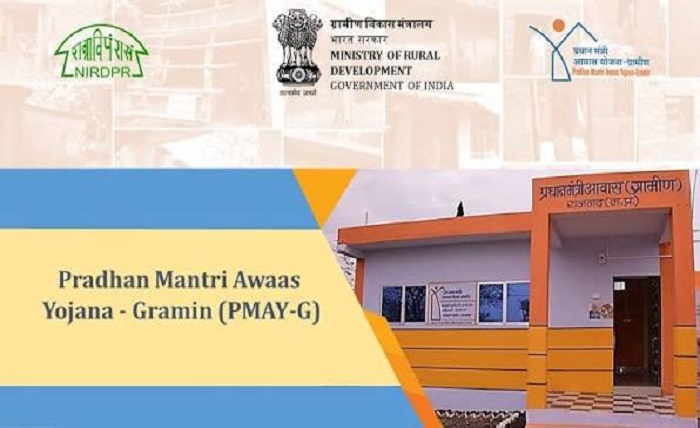
The Pradhan Mantri Awas Yojana Gramin (PMAYG) represents one of India’s most ambitious and impactful rural development initiatives. As a flagship program of the Government of India, the PMAYG aims to provide “Housing for All” by ensuring every rural household has access to a pucca house with basic amenities. Understanding the intricacies of the PMAYG is essential for beneficiaries, policymakers, and stakeholders who are working towards improving rural living standards. The scope of the PMAYG is vast, and its implementation is a critical step toward eradicating homelessness and poverty in the country.
What is the Pradhan Mantri Awas Yojana Gramin (PMAYG)?
The Pradhan Mantri Awas Yojana Gramin (PMAYG) is a centrally sponsored scheme launched to address the housing shortage in rural India. It aims to construct over two crore houses by the end of the scheme’s timeline. The PMAYG focuses on providing financial assistance to rural families who are either houseless or living in dilapidated structures. The core objective of the PMAYG is to ensure that every rural family has a safe and secure home by 2029. The operational framework of the PMAYG relies heavily on technology and transparency, utilizing the AwaasSoft portal and Geo-tagging to monitor progress.
Eligibility Criteria for PMAYG
To avail benefits under the Pradhan Mantri Awas Yojana Gramin, applicants must meet specific eligibility criteria defined by the government. The primary target for the PMAYG is families belonging to the Economically Weaker Sections (EWS) and those identified through the Socio-Economic and Caste Census (SECC) 2011. The PMAYG provides priority to households that do not own a pucca house. Importantly, the PMAYG excludes families with members who are government employees, own motorized vehicles, or possess agricultural land above a certain threshold. The verification process for the PMAYG is rigorous to ensure that the benefits reach the intended beneficiaries.
How to Apply for PMAYG
Applying for the Pradhan Mantri Awas Yojana Gramin is a systematic process designed to be accessible to rural citizens. The most common method to register for the PMAYG is through the nearest Common Service Centre (CSC) or the local Gram Panchayat office. Applicants for the PMAYG need to provide necessary documents, including Aadhaar card, bank account details, and land ownership papers. The application for the PMAYG can also be submitted online via the official PMAY-G website, which hosts the AwaasSoft application. The registration process for the PMAYG involves a verification stage where officials check the eligibility of the applicant.
Financial Assistance and Subsidy Details
One of the most critical aspects of the Pradhan Mantri Awas Yojana Gramin is the financial assistance provided to beneficiaries. Under the PMAYG, the central government provides a fixed amount of financial aid to help construct the house. The assistance offered under the PMAYG is disbursed in installments, which are linked to the construction milestones. Beneficiaries of the PMAYG also receive support for convergence with other schemes, such as the Mahatma Gandhi National Rural Employment Guarantee Act (MGNREGA). The total financial support available under the PMAYG ensures that the construction is completed without compromising on quality.
Technical Standards and House Design
The Pradhan Mantri Awas Yojana Gramin mandates specific technical standards to ensure the construction of durable and disaster-resilient houses. The unit size under the PMAYG is designed to include a living room, a kitchen, and a separate toilet. The design of the houses under the PMAYG is flexible, allowing for customization based on local climate and culture. Beneficiaries of the PMAYG are provided with model designs that are cost-effective and environmentally friendly. The use of local materials in the PMAYG construction is encouraged to reduce costs and support local economies.
Role of Technology in PMAYG
Technology plays a pivotal role in the successful implementation of the Pradhan Mantri Awas Yojana Gramin. The PMAYG uses a robust Geographic Information System (GIS) to map and identify suitable land for construction. Real-time monitoring of the PMAYG is achieved through a mobile application that allows for geo-tagging of the houses. The transparency of the PMAYG is maintained through the AwaasSoft portal, where citizens can track the status of their applications. Data analytics is used extensively in the PMAYG to identify gaps in implementation and ensure quality control.
The Impact of PMAYG on Rural India
The impact of the Pradhan Mantri Awas Yojana Gramin on the rural landscape of India has been transformative. The PMAYG has not only provided shelter but has also improved the overall quality of life for millions. By providing a pucca house, the PMAYG has reduced the vulnerability of rural families to natural disasters and health hazards. The successful implementation of the PMAYG has also contributed to the reduction of poverty levels and enhanced social dignity. The long-term benefits of the PMAYG extend beyond housing, positively affecting education, health, and economic opportunities.
Challenges and the Way Forward for PMAYG
Despite its success, the Pradhan Mantri Awas Yojana Gramin faces several challenges that need to be addressed. The identification of genuine beneficiaries remains a challenge for the PMAYG, requiring continuous updates to the SECC data. The quality of construction in the PMAYG sometimes faces issues due to a lack of skilled labor in rural areas. The administrative machinery responsible for the PMAYG needs to be further strengthened to handle the large volume of applications. Future iterations of the PMAYG will need to focus on climate-resilient construction and the integration of renewable energy sources.
Conclusion
The Pradhan Mantri Awas Yojana Gramin (PMAYG) stands as a testament to India’s commitment to inclusive development and rural upliftment. The comprehensive framework of the PMAYG, which combines financial subsidies, technological integration, and community participation, has set a benchmark for housing schemes globally. As the PMAYG moves closer to its goal of “Housing for All,” its success highlights the importance of policy-driven interventions in addressing basic human needs. The journey of the PMAYG offers valuable lessons in project management and public administration that can be replicated in other sectors. Ultimately, the PMAYG is not just about building houses; it is about building a stronger, more resilient, and equitable India.
FAQs
1. What is the full form of PMAYG?
The full form of PMAYG is Pradhan Mantri Awas Yojana Gramin. It is the rural component of the government’s Housing for All scheme.
2. Who is eligible to apply for PMAYG?
Eligibility for PMAYG is primarily based on the Socio-Economic and Caste Census (SECC) 2011 data. The scheme targets families that are houseless or living in zero, one, or two-room kutcha houses.
3. What is the financial assistance provided under PMAYG?
Under the PMAYG, financial assistance of up to Rs. 1.20 lakh is provided in plain areas and up to Rs. 1.30 lakh in hilly areas and difficult terrain.
4. How can I check my PMAYG application status?
You can check your PMAYG application status by visiting the official PMAY-G website (pmayg.nic.in) and accessing the “Beneficiary Status” section using your registration number.
5. Can I get a loan for PMAYG?
The PMAYG primarily focuses on grants; however, beneficiaries can seek additional funds through the convergence model to increase the size of the house if required.